

What is an Induction Coil?


February 25, 2014

5:00 am
Introduction
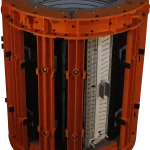
The induction coil is the essential component of any induction heating system, functioning as a tool to transfer energy from the power supply to the metal workpiece. It converts electrical energy into a magnetic field, which then transfers heat to metals without direct contact, enabling a cleaner, faster, and more controllable heating process across industries. These coils range from simple helical windings to complex, precision-machined copper designs for specialized tasks.
How an Induction Coil Works
An induction coil operates on the principle of electromagnetic induction: an alternating current generates a magnetic field around the coil, inducing eddy currents in a conductive metal placed within it. These eddy currents create resistance, directly generating heat within the workpiece through Joule heating. This process allows heating without physical contact, making it clean, fast, and efficient.
The strength of this heating effect depends on the coil’s magnetic field intensity and the resistivity of the workpiece material. For instance, steel heats faster than highly conductive metals such as copper or aluminum due to its higher electrical resistance. Additionally, the depth of penetration of these eddy currents, known as the skin depth, is inversely proportional to the square root of the frequency of the alternating current, the magnetic permeability, and the electrical conductivity of the material. This necessitates careful frequency selection for targeted heating applications.
Induction Coil Design
The effectiveness and uniformity of induction heating depend significantly on the coil’s design. Key
designs include:
- Helical coils: For melting and refining metals.
- Pancake coils: Ideal for surface heating and brazing.
- Channel coils: Used in holding furnaces and continuous metal processing.
Coil construction, including the number of turns, diameter, and spacing, directly impacts field strength and must fit the workpiece. Water-cooled copper tubing is essential to prevent overheating. Ultimately, coil design dictates magnetic field distribution; tighter turns increase strength, while wider spacing creates broader heating zones.
| Coil Type | Applications | Advantages |
| Channel Coil | Melting and refining metals | Efficient for bulk heating |
Helical Coil | Surface heating, brazing | Ideal for localized heating |
| Pancake Coil | Holding furnaces, continuous processes | Stable, consistent heating |
Table 1. Comparison of Induction Coil Types, Applications, and Advantages.
Induction Heating Coil for Forging
Forging requires localized, high-temperature heating of billets or specific parts. The induction heating coil for forging is designed to focus energy precisely where it’s needed, reducing waste and oxidation.
In forging applications, the choice of operating frequency is also important. Higher frequencies heat the surface quickly, while lower frequencies penetrate deeper into the billet, ensuring the part is evenly heated throughout.
Advantages include:
- Rapid and uniform heating of billets.
- Improved metallurgical quality due to reduced surface scaling.
- Flexibility for heating small or large parts depending on coil size.
In modern forging systems, magnetic flux concentrators are often integrated around the coil to direct the field precisely into the billet, increasing efficiency and minimizing stray heating.
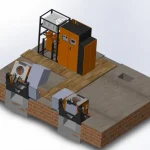
Coil for Induction Heating Furnace
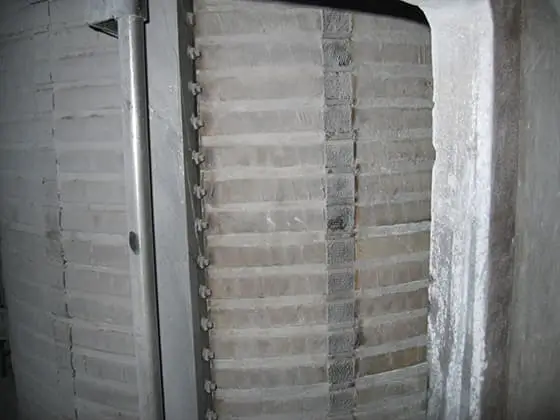
In larger induction furnaces, the coil is responsible for generating the magnetic field that melts entire batches of steel, aluminum, copper, or precious metals. These coils are usually heavy-duty, water-cooled copper tubes designed to withstand extreme electrical and thermal loads.
Because furnace coils carry extremely high electrical currents, they are almost always water-cooled to prevent overheating and extend their service life.
A well-maintained furnace coil ensures:
- Long operating life of the furnace.
- High efficiency with minimal energy loss.
- Consistent melting with fewer impurities.
Advantages of a Well-Designed Induction Coil
A properly designed and maintained coil provides several benefits:
- Higher efficiency – transfers energy directly to the workpiece with minimal loss.
- Longer coil life – durable construction reduces downtime and repair costs.
- Precision heating – accurate targeting of heating zones.
- Cleaner and safer – no open flames, no combustion gases, and reduced workplace risks.
- Versatility – Induction coils can be adapted to heat a wide variety of materials, including steel, copper, aluminum, and even semiconductors such as graphite and silicon carbide.
Why Choose Electroheat?
As the undisputed global leader in induction coil design and manufacturing, Electroheat Induction delivers unparalleled expertise across a comprehensive range of services.
Our reputation as a global induction coil manufacturer is built on the fusion of advanced simulation tools, highly efficient water-cooled designs, and precise magnetic field control. This commitment ensures that every coil we deliver performs consistently and delivers superior quality across diverse industrial applications.
👉 Unlock peak efficiency and performance for your operations. Contact us today to discover more about our innovative induction heating coils and specialized solutions for induction furnaces.