

How do Induction Coils Work


February 18, 2014

5:00 am
Introduction
Induction coils are central to any induction heating system, serving as the critical component for generating the magnetic field that transfers energy to a metal or other conductive workpiece. Without their precise function, the entire system would be inoperative. A thorough understanding of how these coils operate is therefore essential for optimizing efficiency, extending their operational lifespan, and ensuring consistent heating performance. At Electroheat Induction, we prioritize quality, specializing in precision coil design to maximize performance in diverse industrial applications.
Working Principle of Induction Coils
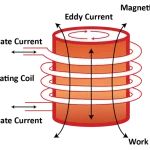
The flow of alternating current through an induction heating coil generates an alternating magnetic field that permeates the nearby conductive workpiece. This interaction leads to two primary effects:
- Eddy currents are induced within the workpiece. These currents circulate in closed loops inside the material, generating heat due to its electrical resistance.
- For magnetic materials, an additional phenomenon, hysteresis heating, contributes to this effect. It arises as magnetic domains within the material struggle to align with the fluctuating external magnetic field, producing extra heat until the Curie temperature is reached.
These two fundamental mechanisms collectively underpin the induction coil’s working principle, facilitating efficient energy transfer directly into the material without physical contact.
The efficacy of this heating process is directly influenced by both the magnetic field’s strength and the workpiece material’s electrical resistance. Consequently, materials exhibiting higher resistivity, such as steel, tend to heat more rapidly than highly conductive metals like copper or aluminum.
Energy Transfer and the Skin Effect
One of the most important aspects of induction heating is the skin effect. The alternating magnetic field forces current to flow mainly at the surface of the material:
- High frequencies → shallow heating, ideal for small parts or surface treatments.
- Low frequencies → deeper penetration, better for larger components and bulk heating.
For example, stress-relieving steel may require lower frequencies to reach deeper into the part, while hardening a thin surface layer needs higher frequencies for efficiency.
Induction heating systems can operate across a wide range of conditions, from 100°C (212°F) to over 3000°C (5432°F), and for durations lasting fractions of a second to several hours, depending on the application.
Coil Design and Magnetic Flux Control
The design of the coil dictates the efficiency of energy transfer, with various types suited for specific applications:
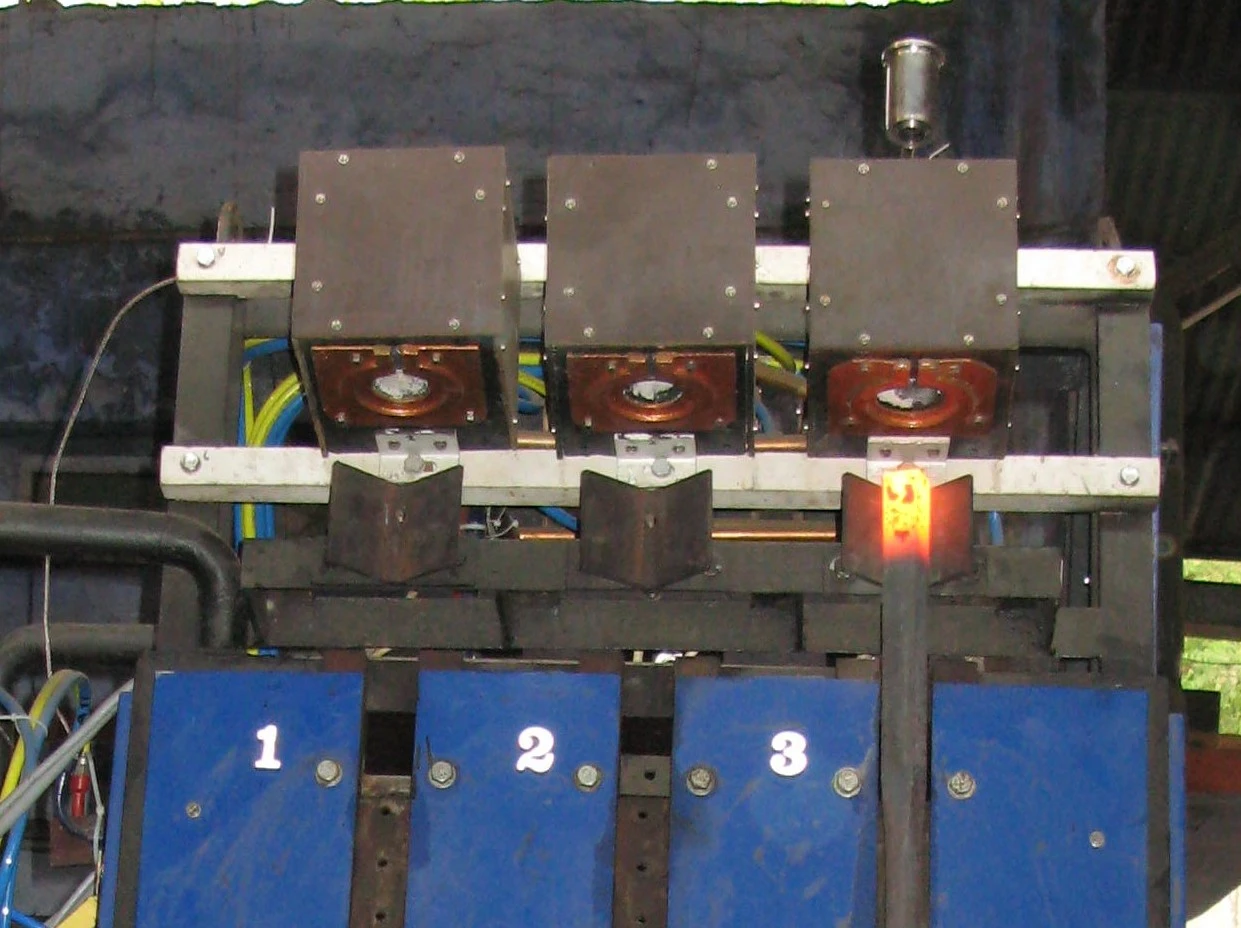
- Helical coils are commonly used for melting and general heating processes.
- Pancake coils are often employed for brazing and surface heating applications.
- Channel coils find their primary use in holding furnaces.
Additionally, engineers frequently incorporate magnetic flux controllers to optimize the flow of the magnetic field around the coil and workpiece. These controllers, sometimes referred to as concentrators or shields, function as magnetic “lenses.” They focus the electromagnetic field precisely where heat is needed, thereby increasing heating efficiency, reducing energy losses, and extending coil life. Fluxtrol composites are an example of materials utilized for magnetic flux controllers due to their advantageous magnetic, thermal, and mechanical properties.
Applications of Induction Coils
Table 1 below summarizes typical induction coil applications by frequency range and material type.
| Application | Typical Frequency | Materials Heated |
| Forging & Hardening | Medium to high | Steel billets, automotive parts |
| Melting Metals | Low to medium | Steel, copper, aluminum, precious metals |
| Brazing & Soldering | High | Pipes, tools, wires |
| Shrink Fitting & Welding | Medium | Bearings, shafts, tubes |
| Surface Heating | High | Small parts, surface layers |
Advantages of Induction Coils
Well-designed induction coils offer significant benefits:
- Efficiency – Heat is generated directly inside the material.
- Safety – No flames or combustion gases.
- Repeatability – Consistent and precise results.
- Flexibility – Suitable for metals, alloys, and even semiconductors (graphite, silicon carbide).
- Extended fixture and coil life – Reduced stress on equipment due to controlled heating.
- Energy Savings – Optimized coil design minimizes power loss, improves thermal efficiency, and reduces overall operating costs.
Elevate Your Industrial Processes with Electroheat Induction
As a leading global manufacturer, Electroheat Induction offers advanced coil solutions, meticulously designed for:
- Optimized Performance: Custom coils tailored for melting, forging, brazing, and heat treatment.
- Maximized Efficiency & Durability: High-durability, water-cooled copper coils ensure extended operational life and energy savings.
- Superior Precision: Magnetic flux optimized designs leverage cutting-edge tools for unmatched heating accuracy and efficient energy transfer.
- Seamless Integration: Comprehensive worldwide installation and continuous technical support.
With decades of global expertise, Electroheat consistently delivers superior results and upholds stringent performance and energy standards.
👉 Revolutionize your production process. Contact Electroheat Induction today to unlock enhanced precision, efficiency, and significant operational improvements.