

Table of Contents
Product Snapshot
| Parameter | Specification |
|---|---|
| Product Type | Industrial induction furnace for steel melting; available as laboratory, medium-size, and large production systems |
| Power Range | 50 kW to 10,000 kW |
| Melting Capacity | 50 kg to 20 tons |
| Frequency Range | Medium frequency, approximately 0.5 kHz to 50 kHz, depending on system design and duty |
| Power Factor Performance | Power factor above 0.96 under normal operating conditions, subject to system configuration, load condition, and site power quality |
| Melt Cycle | Shorter cycles due to direct heat generation in the charge; actual time depends on charge weight, scrap density, alloy type, and target tapping temperature |
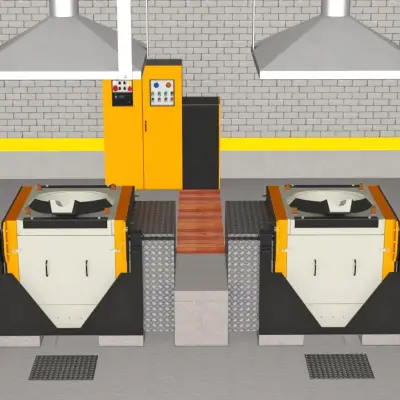
| Furnace Configuration | Single or double crucible, aluminum frame, cast side frame, or steel frame structure, depending on size and production duty |
| Core Technology | Insulated-gate bipolar transistor (IGBT) inverter, digital signal processor (DSP)-based control, PLC, HMI, hydraulic tilting, energy monitoring, and data logging |
| Cooling System | DM water circulation with cooling tower interface |
| Supported Metals | Steel, cast iron, stainless steel, alloy grades, and selected non-ferrous melting applications |
What is an Induction Steel Melting Furnace?
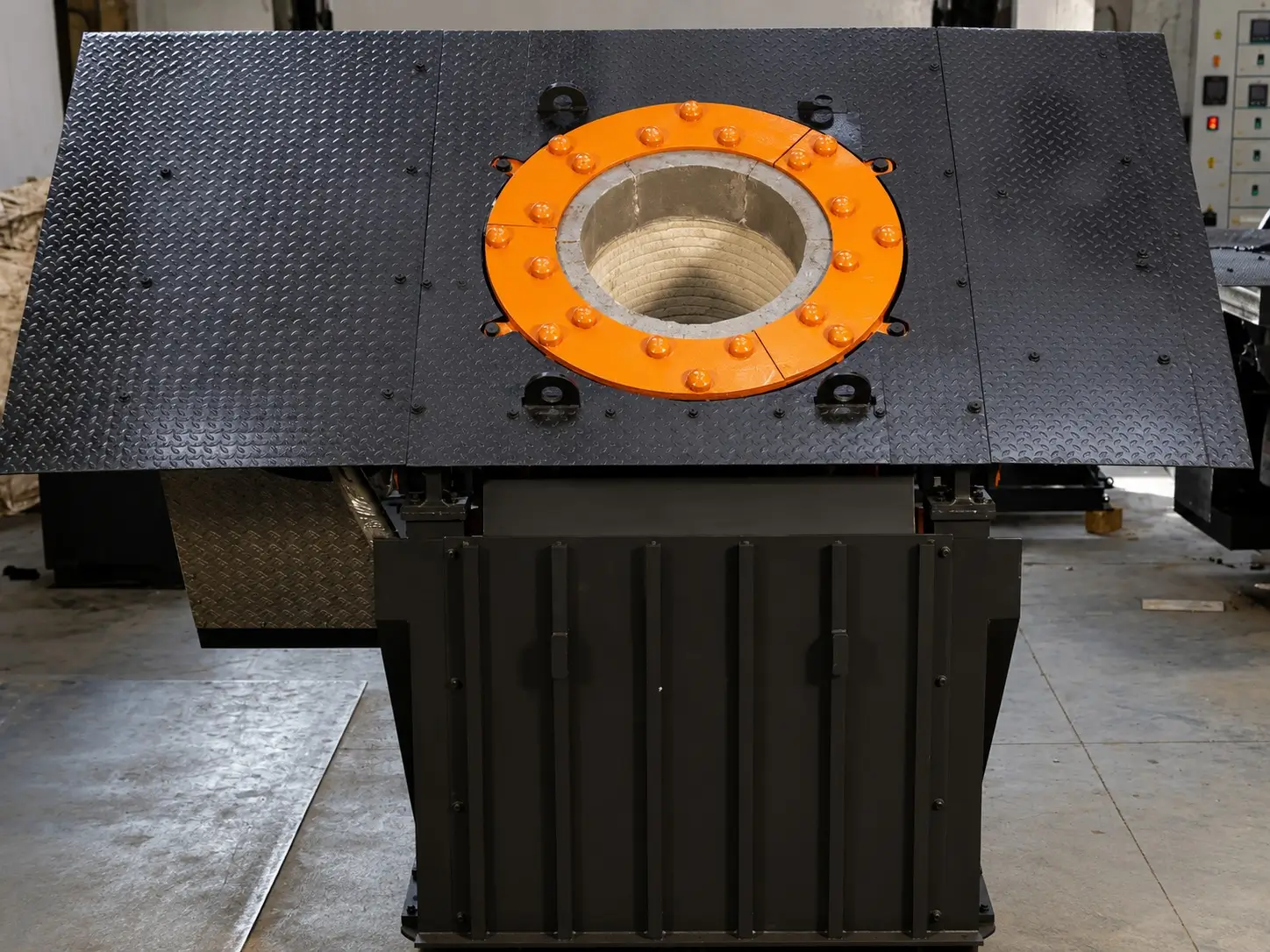
Foundries and manufacturers use Electroheat Induction’s steel induction melting furnaces to melt steel faster, reduce energy consumption per ton, and maintain precise metallurgical control without combustion or open-flame heating. The system is designed for industrial melt shops where repeatable output, tighter process control, and cleaner point-of-use operation matter as much as installed power.
How Induction Furnaces Can Improve Steel Melting Operations
This is different from traditional methods that use an external burner. The difference is important to procurement teams because it affects how the furnace works during production. With an induction furnace, operators can quickly adjust power and control temperature. It also makes it easier to correct alloys, reducing the need for indirect heating.
An induction furnace for melting steel is an electric system that generates heat within the metal charge, enabling precise control over the process and helping foundries achieve consistent quality and reliability.
How Induction Furnace Technology Works
Induction heating uses electromagnetic energy. A copper coil with an alternating current creates a magnetic field around the furnace vessel. This magnetic field induces a current in the metal, generating heat directly in the material. The heat is generated within the metal itself, rather than being transferred from an external flame or combustion chamber.
This direct heating method enables faster thermal response, reduced external heat loss, and greater control over the melt. As heat builds up in the metal, the system responds quickly to changes in power. This faster response is useful when working with variable scrap, making alloy adjustments, or following a controlled tapping schedule.
IGBT Power Supply
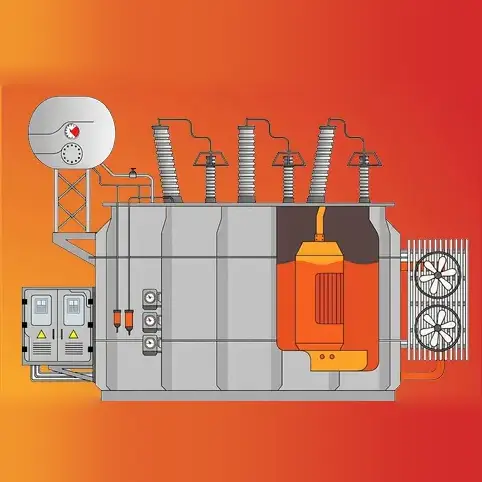
An IGBT power supply uses insulated-gate bipolar transistor technology. It converts incoming AC power into a controlled medium-frequency output. This output is then used for the melting circuit. In an induction furnace, the power supply controls the electrical energy delivered to the coil. It adjusts as the charge condition changes during heating.
This control matters because packed scrap, partly molten charges, and a fully molten bath behave differently electrically. The IGBT power supply automatically adjusts output conditions. This helps the furnace maintain stable heating during charging, melting, superheating, and holding.
This control level supports a smoother ramp-up. It enhances melting stability and improves power factor performance. Additionally, it improves coil behavior and enhances electrical operation during production.
What a Melt Cycle Includes
A melt cycle has five steps: charge loading, power ramp-up, active melting, temperature correction (or superheating), and tapping. The cycle length depends on the furnace rating, charge composition, scrap density, initial material condition, and the final temperature target.
These furnaces are favored in foundries where consistency matters. Each melt cycle is both repeatable and programmable. Also, every heat can be monitored, adjusted, and documented in real time.
How Frequency and Load Behavior Affect Melting
Foundries operating induction steel-melting furnaces benefit from a power supply that adapts to load changes. A well-controlled power supply responds to these changes in real time, keeping heating stable and avoiding unnecessary electrical stress.
This matters in production. Frequency control, capacitor behavior, and current management all affect safety and stability, helping operators maintain a secure and predictable environment from the first heat to the tap.
Why Foundries Choose Induction Furnaces
Foundries choose induction steel-melting furnaces for their performance and cost advantages. These systems deliver consistent efficiency and control during batch production. They distinguish induction systems from fuel-fired and indirect heating options in daily operations.
- Faster melt cycles: Heat forms directly in the metal charge, eliminating delays from external heat sources. Operators can quickly adjust power as melt conditions shift, boosting responsiveness and helping keep Melt-Shop schedules on track.
- Lower energy burden: Induction melting doesn’t use combustion at the melt zone, avoiding many thermal losses linked to indirect heating. As a result, energy use per ton drops. It also improves the plant’s electrical capacity and supports lower costs.
- Better metallurgical control: Melting steel means not just reaching the right temperature but also maintaining it. Induction systems enable precise control of temperature, superheat, and alloy adjustments. This helps foundries maintain bath quality and reduces variation between heats. This is crucial for stainless steel, alloy steel, and mixed ferrous scrap, as chemical consistency impacts casting quality.
- ·Cleaner operating environment: Electric heating keeps the melt area cleaner than fuel-fired methods. This enhances shop-floor organization, ventilation, and working conditions. Maintenance is also simpler because there are no burners, fuel trains, or combustion components.
- Improved process visibility and uptime support: Real-time electrical data, interlock tracking, alarm history, and stored operating data help operators quickly address issues. Maintenance teams can also troubleshoot more quickly by determining whether a problem is related to power, cooling, interlocks, or operating limits.
Energy Management in Steel Induction Melting
A steel induction melting furnace performs best when equipment sizing, power control, cooling, charge preparation, melt scheduling, and operator practice are managed as a single system. This matters because steel production is energy-intensive. The U.S. Department of Energy’s Industrial Decarbonization Roadmap reports that the steel industry accounts for approximately 5% of U.S. industrial energy use and 8% of U.S. industrial greenhouse gas emissions, with process heating representing the largest share of the steel sector’s energy demand [1].
For foundries, energy performance is not determined solely by installed kW. It depends on how efficiently electrical input is converted into useful heat and how well the melt shop avoids preventable losses. Clean, dry, dense, and well-sequenced scrap improves electromagnetic coupling and helps the furnace move efficiently from a cold charge to a molten bath. Poor charge preparation, excessive holding, unnecessary superheating, and delayed tapping can increase energy use even when the furnace itself is efficient [2].
Modern induction melting also benefits from data-informed operation. As the load changes from packed scrap to molten bath, the power supply, coil, capacitor bank, and control system must respond smoothly. Research on induction furnace melting patterns shows that time-series operating data can help identify better melting practices and reduce energy costs when operators use it to guide production decisions [3].
In practical melt-shop terms, energy management should include power sequencing, demand control, cooling-system reliability, refractory conditions, timely tapping, and real-time visibility through HMI, diagnostics, alarms, and production reports. Recent work on induction-furnace energy-management strategies also emphasizes monitoring, process optimization, and control-based decision-making as practical approaches to reduce operating costs and improve furnace performance [4].
For steel foundries, the best results come from combining engineered equipment with disciplined operation. Correct capacity selection, stable IGBT-based power delivery, effective cooling, controlled superheat, good charging practices, operator training, and real-time data visibility all help reduce energy waste and improve production consistency. In this sense, an Electroheat steel induction melting furnace should be viewed not only as a melting unit but also as an energy-managed production platform for foundry and manufacturing environments.
Beyond Energy Savings: Operational Benefits for Foundries
Energy savings are only one part of the value of steel induction melting. For foundries, the broader business case also includes faster start-up, shorter melt cycles, improved bath consistency, better alloy control, lower scrap losses, cleaner point-of-use operation, reduced maintenance burden, and better working conditions.
These benefits matter because melting affects casting quality, production speed, and shop-floor reliability. A furnace platform that allows operators to monitor temperature, power input, alarms, cooling status, and heat records can help reduce variation from one heat to the next and make production easier to manage. Research on industrial electric technologies identifies productivity, product quality, maintenance, safety, waste reduction, and emissions performance as important non-energy benefits that influence equipment investment decisions [5].
For Electroheat customers, the furnace is more than a melting vessel. IGBT-based power delivery, HMI monitoring, data logging, interlocks, hydraulic tilting, and controlled cooling add daily operational value. Together, these features support better process control, maintainability, production flexibility, melt-shop discipline, and energy performance.
System Configuration and Engineering Design
Furnace Configurations by Size and Duty
Electroheat offers steel induction melting furnaces in small-, medium-, and large-capacity configurations for foundry and manufacturing applications. The approved range covers output power from 50 kW to 10,000 kW and melting capacity from 50 kg to 20 tons, depending on furnace configuration, metal type, production duty, and site utility conditions [6]. Configurations can be selected for batch melting, foundry production, ferrous scrap melting, alloy steel melting, stainless steel melting, and heavy-duty industrial melting applications.
This range matters because the right furnace is selected based on duty, not just headline power. A buyer might need a compact crucible for precise alloy work. They might also require a medium-capacity system for foundry batch production. For heavier industrial melting, a larger steel-frame setup is ideal. The configuration must align with throughput goals, charge practices, tap frequency, available utilities, and the required level of automation.
To ensure the furnace matches specific operational needs, buyers can specify requirements such as melt capacity, power rating, crucible size, alloy handling, automation level, and cooling preferences during the quotation and design phase. Custom features and options can be requested by outlining project priorities with the Electroheat technical team, which will help develop a configuration tailored to the buyer’s application. This process helps procurement teams align furnace solutions with company goals and shop-floor requirements.
Coreless Induction Furnace Design
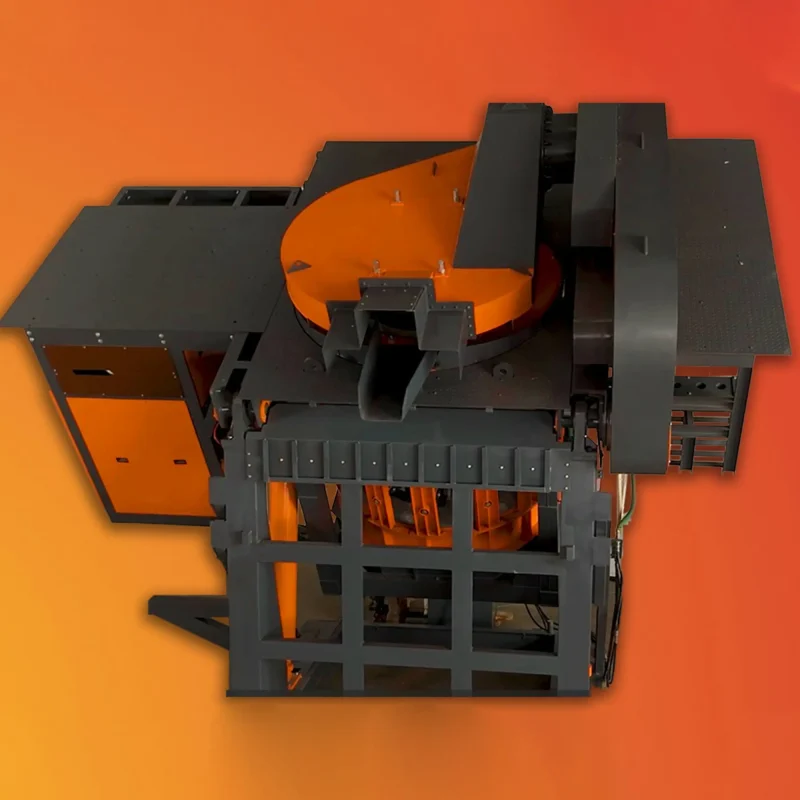
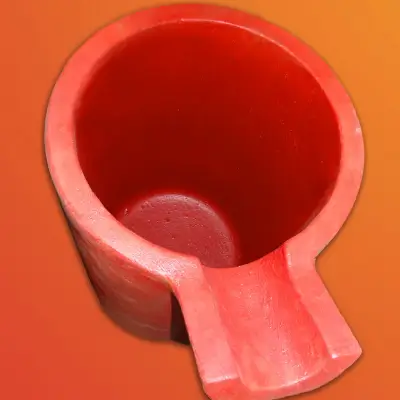
Coreless induction furnaces work well for most steel foundry needs. They consist of a refractory-lined crucible and an induction coil. The crucible holds the charge, while the coil generates the electromagnetic field that melts it.
This setup supports batch melting, scrap flexibility, and grade changes. Operators can easily start, stop, and adjust conditions, unlike channel systems designed for holding.
Main System Components
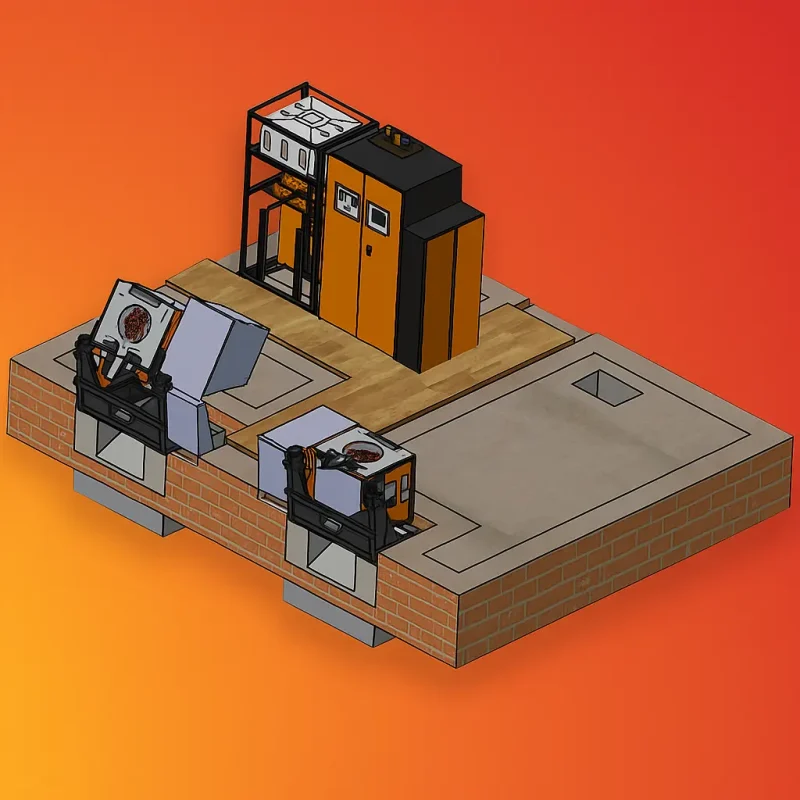
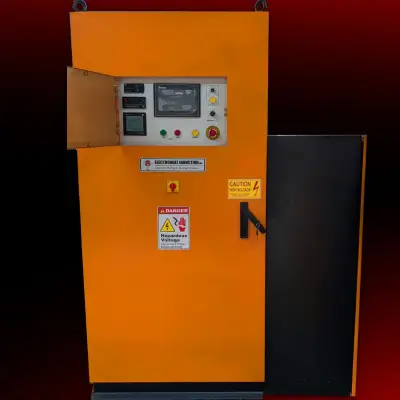
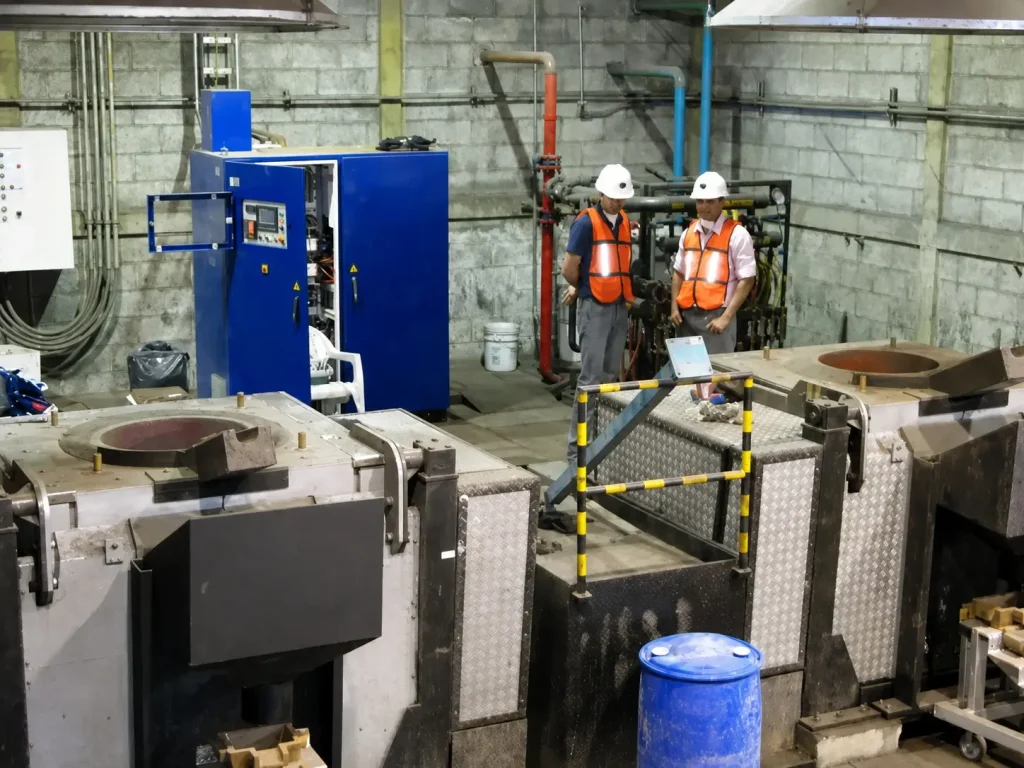
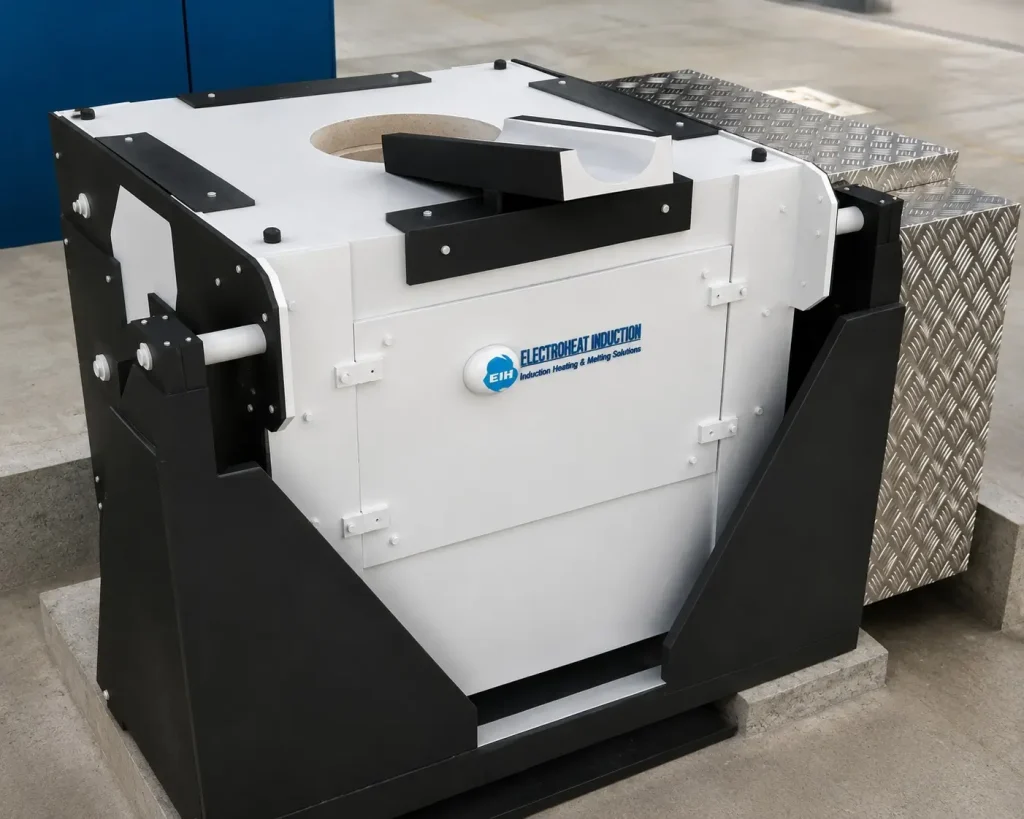
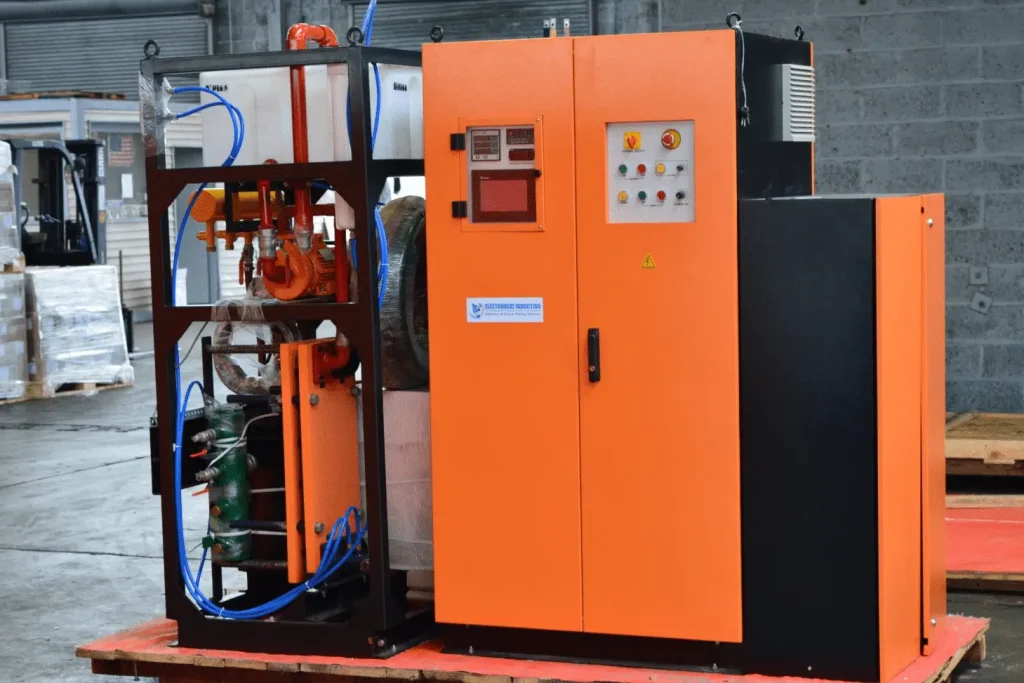
A complete steel-melting platform consists of several essential components. These include the main power-source panel, control panel, induction coil, crucible zone, capacitor bank, di/dt coil, DM water circulation unit, cooling-tower connection, and hydraulic tilting assembly. Together, they form a unified melting system.
The power source converts and manages electrical energy for the melting circuit. The capacitor bank, di/dt coil, tank circuit, and induction coil ensure controlled heating of the charge as load conditions change. The crucible zone contains molten metal and must withstand thermal, mechanical, and electromagnetic stresses throughout the production process.
The cooling system prevents the coil, capacitor bank, and power circuit from overheating. The hydraulic tilting assembly enables controlled pouring. Meanwhile, the control panel, HMI, interlocks, and operator inputs provide vital information about the furnace’s status.
Cooling Architecture and Protection
Cooling is vital to furnace reliability. The power circuit, induction coil, capacitor bank, and other components are subject to high electrical and thermal loads. A well-designed cooling system removes heat from these components, ensuring stable furnace operation during melting.
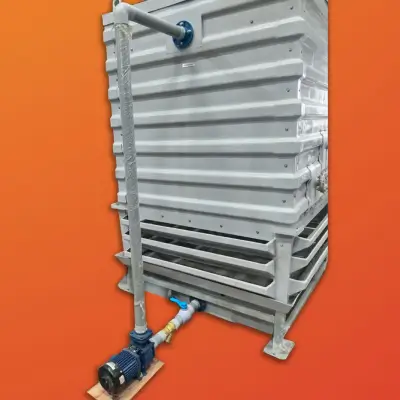
In a steel induction furnace, cooling typically uses controlled water circulation. This water flows through critical components of the furnace and power systems. Heat-rejection equipment, such as cooling towers, heat exchangers, or closed-loop systems, supports this process based on specific installation requirements. These measures help protect copper conductors, capacitor banks, coil circuits, and power electronics from overheating during operation.
For reliable performance, cooling water flow, conductivity, pressure, and temperature must remain within set limits. Effective cooling management lowers the risk of overheating, insulation stress, corrosion, scale buildup, cooling-path blockage, and early component failure. It also supports safer operation, longer equipment life, and more consistent melting performance.
Hydraulic Tilting, Interlocks, and Safe Operation
During production, hydraulic tilting supports controlled the tapping of molten metal. Engineered for precision, the mechanism ensures smooth, predictable, and stable movement. This precision is critical for operator safety, ladle control, and the consistency of downstream casting operations.
Safe furnace operation relies on interlocks and diagnostic indicators. These tools monitor key conditions such as water flow, conductivity, leakage current, component temperature, and electrical limits. They help prevent unsafe operation and provide operators with clear alerts when a fault or limit condition arises.
For foundries, these protections matter for both safety and uptime. A furnace that pinpoints the source of an interruption helps operators and maintenance teams. They can respond faster, isolate faults more accurately, and return the system to service with less guesswork.
Digital Control, Monitoring, and Data Visibility
Operator Interface and Process Visibility
Electroheat’s control architecture offers real-time access to key electrical and process parameters. These include current, voltage, frequency, power reference, power factor, and energy consumed during heating. This feature gives operators and supervisors a clearer view of furnace behavior, moving beyond manual estimates.
The HMI-oriented approach matters on the shop floor because it reduces guesswork. Operators can see whether the system is ramping normally, cooling conditions remain healthy, or the furnace is approaching a limit state that requires attention.
Maintenance and Reporting Value
Data logging and reporting help maintenance teams spot electrical, cooling, hydraulic, and interlock issues. Heat reports, daily reports, alarm history, and minute-by-minute process records speed up troubleshooting. They also help make better long-term decisions.
This logged data supports trend tracking, fault review, and preventive maintenance planning.
Why This Matters Commercially
Digital reporting impacts uptime, diagnostic speed, training, and equipment operation. It provides a traceable performance history. This enhances serviceability and reduces the operating uncertainty buyers often experience when evaluating industrial melting systems.
Applications and Industry Use
These furnaces are great for steel foundries, casting plants, recycling, fabrication, and general manufacturing. They are preferred where alloy control, consistent tapping, and clean electrical melting matter more than combustion methods.
Typical Melting Applications
Common applications include:
- Melting steel scrap
- Producing carbon and alloy steel
- Melting stainless steel
- Preparing ingots and billets
- Casting operations
These processes need controlled heat and a consistent furnace response.
Material Flexibility
Electroheat’s steel induction furnaces work for steel, cast iron, stainless steel, and alloy grades. They also support some non-ferrous applications. This flexibility is important for foundries that process multiple grade families or need a furnace that adapts to changing production needs.
Technical Comparison of Furnace Types
Coreless vs Channel Furnace
A coreless furnace is generally the better choice for flexible batch melting, scrap melting, alloy changes, and foundry duty that requires frequent starts, stops, and grade changes. A channel furnace is more often associated with holding or continuous-duty conditions, in which a molten heel is maintained.
| Feature | Coreless Furnace | Channel Furnace |
|---|---|---|
| Operating Model | Batch melting | Holding or continuous-duty support |
| Start and Stop Flexibility | High | Lower |
| Alloy Changeover | Easier | More limited |
| Best Fit | Foundries, scrap melting, grade changes | Holding and steady-state use |
Induction vs Gas-Fired Furnace
Compared with gas-fired melting, induction provides direct electrical heating of the charge, a quicker response, cleaner point-of-use operation, and tighter control over temperature adjustments. Gas-fired units may still suit certain applications, but they typically involve broader combustion-related thermal losses and a different maintenance profile.
| Comparison Area | Induction Furnace | Gas-Fired Furnace |
|---|---|---|
| Heat Generation | Direct heat is generated in the metal charge | Indirect heat is transferred from the combustion source |
| Thermal Loss Pattern | Lower external thermal loss at the point of use | Higher loss associated with exhaust and indirect transfer |
| Point-of-Use Emissions | No direct combustion at the melt zone | Combustion gases present at the heating source |
| Temperature Response | Fast electrical adjustment and fine control | Typically, a slower ramp and stabilization response |
| Maintenance Focus | Electrical, cooling, coil, refractory, and hydraulic systems | Burners, fuel train, refractory, exhaust-side maintenance |
Induction vs Electric Arc Furnace
Compared with an electric arc furnace, induction is better suited for controlled, foundry-scale batch melting, where cleanliness, alloy discipline, and predictable operation are primary considerations. Arc furnaces are often chosen for processing heavier scrap on a larger scale. The correct choice depends on the plant model, charge mix, throughput target, and capital strategy.
| Comparison Area | Induction Furnace | Electric Arc Furnace |
|---|---|---|
| Primary Strength | Controlled batch melting and metallurgical discipline | Heavy scrap processing on a larger scale |
| Process Environment | Cleaner point-of-use melting conditions | Higher environmental and utility complexity |
| Operating Control | High-precision temperature and power control | Strong for scale, less focused on foundry-style batch discipline |
| Typical Fit | Foundries and controlled melt shops | Large steelmaking and scrap-intensive operations |
Installation, Commissioning, and Support
Installation and Startup
A successful commissioning process follows a structured sequence:
- Review foundation and layout
- Confirm utilities
- Ensure cooling circuit readiness
- Place equipment, integrating any custom-built solutions for specific operational needs
- Complete electrical connections
- Validate all interlocks
- Prepare the refractory
- Conduct initial heating checks
- Oversee the initial heats
Customizing equipment placement for the application ensures the furnace is optimized from the start. This comprehensive approach helps achieve reliable performance and efficiency right from the first operation.
After-Sales Support
After installation, buyers need help with diagnostics, spare parts planning, preventive maintenance, and operator guidance. The integrated control and reporting system shines here. It isolates faults quickly and reduces guesswork during troubleshooting.
Electroheat supports clients with a comprehensive range of after-sales services, including:
– 24/7 technical support via phone, email, and remote diagnostics
– Onsite and remote operator training tailored to your team’s needs
– Preventive maintenance agreements and scheduled service visits
– Access to detailed user manuals, technical documentation, and maintenance checklists
– Rapid spare parts supply and recommended parts inventories
– Ongoing system health monitoring and troubleshooting assistance
Training sessions can be arranged for new and existing operators to ensure safe and efficient use of the equipment. Service contracts offer additional peace of mind, helping foundries maintain operational continuity and maximize furnace uptime.
Lead Times and Upgrade Paths
Delivery timelines for industrial induction melting systems vary by project. Lead time depends on power rating, melt capacity, supply scope, control system complexity, and site integration needs. As a general guideline, standard systems are typically delivered within 8 to 12 weeks, while custom-engineered systems may require 12 to 20 weeks, depending on project complexity and special requirements. Providing this range helps buyers plan procurement and coordinate project schedules more effectively. For facilities with older fuel-fired or legacy electrical melting equipment, consider replacement and upgrade options.
Why Electroheat Induction
Founded in 2005, Electroheat brings deep expertise in power electronics, furnace control, and industrial heating. Since 2008, the company has specialized in manufacturing induction furnaces.
Electroheat furnaces go beyond a basic melting vessel, offering IGBT-based power, PLC/HMI controls, hydraulic tilting, advanced cooling, energy monitoring, and comprehensive diagnostics. These features provide operators with real-time process visibility and simplify troubleshooting for maintenance teams.
Systems are engineered for practical plant needs, including demand and power factor management, alarm tracking, heat reporting, and seamless integration with automation platforms such as SCADA and MES. Custom configurations are available to match capacity, duty cycle, metal grade, automation, and cooling requirements.
Electroheat stands out for its smart design, robust controls, diagnostic transparency, and responsive technical support, ensuring reliable melting, consistent production, and safe, supervised operation.
Contact Electroheat for application guidance, project-specific quotes, or ROI projections. The team also provides real-world case studies to help buyers evaluate operational and financial benefits.
Technical Credibility and Buyer Confidence

Meet Charlie Parsana,
Chief Induction Furnace Engineer
Charlie Parsana is Chief Engineer at Electroheat Induction, with 22 years of experience in induction furnace systems, steel-melting applications, and foundry-duty equipment support. His technical work spans induction furnace configuration, IGBT-based power supply systems, furnace sizing, cooling protection, hydraulic tilting, interlock systems, HMI-based monitoring, commissioning support, and troubleshooting for industrial melting operations. For steel foundries and manufacturing plants, his role helps ensure that furnace recommendations align with practical melt-shop requirements, including charge material, melt capacity, power availability, cooling readiness, tap frequency, operator safety, and production goals.
“A reliable steel induction melting furnace is not selected by capacity alone. It must be matched to the customer’s melt rate, charge practice, power supply, cooling system, and foundry production requirements.” — Charlie Parsana, Chief Engineer, Electroheat Induction.
Our Partners

Expert Guidance on Induction Heating Solutions
What is a steel induction melting furnace?
A steel induction melting furnace is an electric furnace that uses electromagnetic energy to melt steel and other ferrous metals quickly and efficiently. Unlike traditional furnaces that rely on combustion, induction furnaces generate heat directly within the metal charge, allowing for precise control and reduced energy consumption.
How does an induction furnace work?
Induction heating uses a copper coil to generate an alternating magnetic field around the furnace vessel. This magnetic field induces a current in the metal, producing heat directly. Unlike external burners, this method reduces heat loss and provides a faster thermal response to changes in power.
What types of induction furnaces are available?
Induction furnaces come in various sizes and configurations, including laboratory, medium-sized, and large production systems. They can also feature single or double crucibles, depending on the production duty and application requirements.
What are the benefits of using an induction melting furnace?
Induction furnaces are important in metal processing due to their key advantages. They are efficient, with shorter melt cycles and lower energy use; precise in temperature and alloy control; clean in operation without combustion; and consistent, with repeatable outputs.
What power range do these furnaces support?
Electroheat’s current approved steel induction melting furnace range supports output power from 50 kW to 10,000 kW. The appropriate power rating is selected based on the required melt rate, batch size, metal grade, charge density, available plant power, tap frequency, and production targets.
How does the power supply work in an induction furnace?
The furnace utilizes an IGBT (Insulated-Gate Bipolar Transistor) power supply to convert incoming AC power into a controlled medium-frequency output. This allows for stable heating as conditions change during the melting process, ensuring more stable melting.
What is the melting capacity of these furnaces?
The approved melting capacity range is 50 kg to 20 tons, depending on furnace design, metal type, charge practice, power rating, and production duty. This allows buyers to specify systems for smaller controlled batches, regular foundry production, or larger industrial melting requirements.
What types of steel can be melted in an induction furnace?
Induction furnaces are versatile and can melt various metals, including carbon steel, alloy steel, stainless steel, and cast iron. Their precise temperature control ensures high-quality steel production, and they can also handle selected non-ferrous materials, making them valuable in metallurgical processes.
What cooling systems are used in induction furnaces?
Most induction furnaces use a DM water-cooling system, often integrated with a cooling tower. This helps maintain proper operating temperatures and prolongs the equipment’s life.
What maintenance does an induction furnace require?
Routine maintenance focuses on cooling circuits, refractory condition, electrical inspection, coil health, hydraulic components (if applicable), and reviews of alarms and data logs.
Do you provide installation and startup assistance?
Commissioning support should be part of the project scope, including installation review, startup checks, and supervised initial operation.
Can existing melting setups be upgraded?
Yes. Facilities transitioning from older fuel-fired or legacy electrical systems can consider upgrading or replacing them with newer IGBT-based melting platforms. These platforms offer better control and diagnostics.
Why should I choose an induction melting furnace from Electroheat for my foundry?
Electroheat induction furnaces offer high energy efficiency and cost savings, enabling optimal melting conditions. They are durable, low-maintenance, and feature user-friendly controls for easy operation.
References
[1] J. Cresko, E. Rightor, A. Carpenter, K. Peretti, N. Elliott, S. Nimbalkar, W. R. Morrow III, A. Hasanbeigi, B. Hedman, S. Supekar, et al., U.S. Department of Energy’s Industrial Decarbonization Roadmap, U.S. Department of Energy, Office of Energy Efficiency and Renewable Energy, Washington, DC, USA, Rep. DOE/EE-2635, Sep. 2022. [Online]. Available:https://doi.org/10.2172/1961393.
[2] J. F. Schifo and J. T. Radia, Theoretical/Best Practice Energy Use in Metalcasting Operations, U.S. Department of Energy, Industrial Technologies Program, May 2004. [Online]. Available:https://doi.org/10.2172/1216246.
[3] D. A. Howard, B. N. Jørgensen, and Z. Ma, “Identifying Best Practice Melting Patterns in Induction Furnaces: A Data-Driven Approach Using Time Series K-Means Clustering and Multi-Criteria Decision Making,” in Energy Informatics, EI.A 2023, Lecture Notes in Computer Science, vol. 14467. Cham, Switzerland: Springer, 2024, pp. 271–288. [Online]. Available:https://doi.org/10.1007/978-3-031-48649-4_16.
[4] M. M. Gani, F. Rabbi, M. I. U. Forkan, P. P. Das, J. Mitra, and N. Mohammad, “Energy Management Strategies for Induction Furnaces: A Cost-Effective and Sustainable Approach to Steel Mills,” in Proc. 2025 Int. Conf. Electrical, Computer and Communication Engineering (ECCE), Chattogram, Bangladesh, 2025, pp. 1–6. [Online]. Available:https://doi.org/10.1109/ECCE64574.2025.11013149.
[5] I. Laaguidi, S. Krishnamoorthy, and R. Ranhotra, “The Non-Energy Benefits for Industrial Electric Technologies,” Electric Power Research Institute, in Proc. ACEEE Summer Study on Energy Efficiency in Industry, 2021. [Online]. Available:https://www.aceee.org/sites/default/files/pdfs/ssi21/panel-2/Laaguidi.pdf
[6] Electroheat Induction Inc., Induction Melting Furnace product brochure and Induction Melting Furnace and Its Components technical white paper, Electroheat Induction Inc., 2025. Available: https://electroheatinduction.com/