


Twin 100 kg Gold and Silver Induction Smelting
Furnace Installation in Nevada, USA
Table of Contents
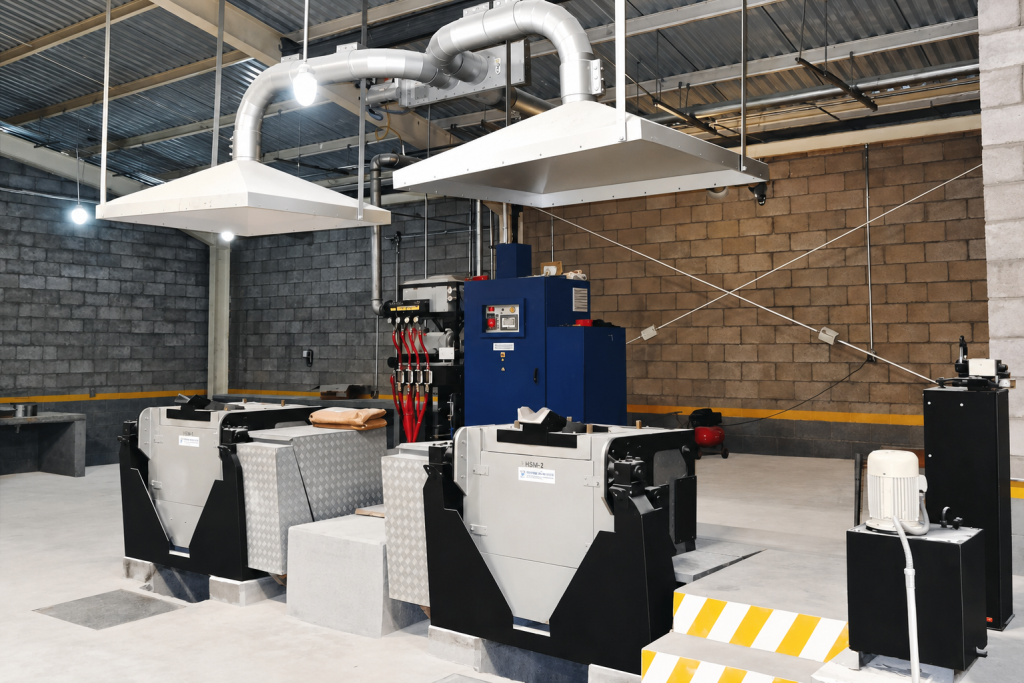
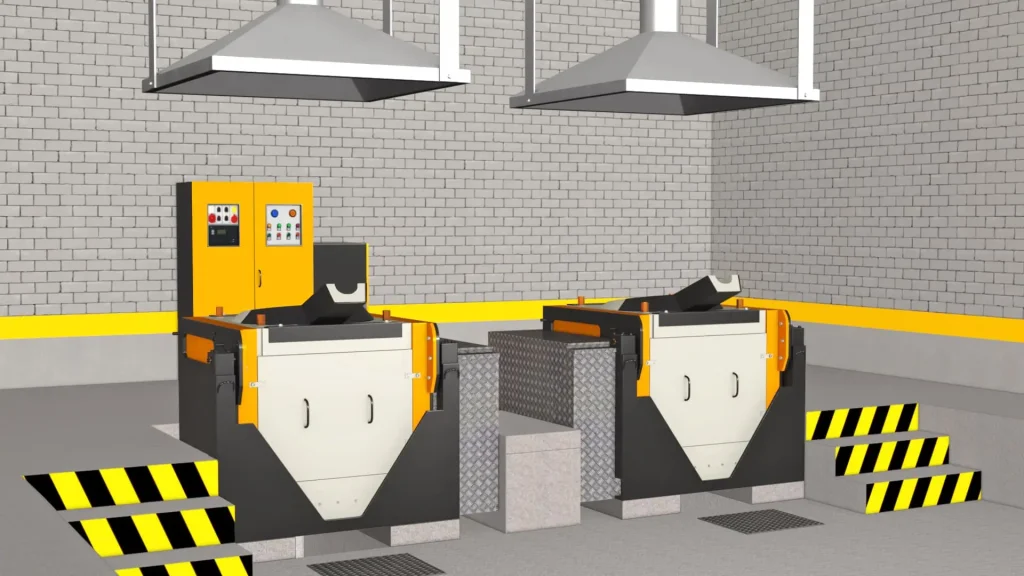
A Nevada-based precious-metal recovery and refining operation required a melting line capable of keeping gold- and silver-bearing batches separate while offering operators enhanced control over each heat. Electroheat provided, installed, and commissioned a twin-furnace coreless induction smelting system. This system includes two 100 kg hydraulic-tilting vessels, a medium-frequency IGBT power platform, PLC/HMI controls, demineralized-water cooling, overhead fume extraction, and detailed heat-by-heat data logging. One vessel mainly handles gold precipitate, doré, bullion, and clean gold returns, while the other manages silver precipitate, silver-rich feed, bullion, and clean silver scrap. The client’s identity and production details are confidential. This case study outlines the configuration installed, commissioning efforts, and the qualitative improvements observed during handover.
Project at a Glance
| Project Item | Installed Details |
| Client | Confidential precious-metal recovery and refining operation |
| Location | Nevada, United States |
| Installed system | Two 100 kg coreless induction smelting furnace bodies in a twin-furnace arrangement |
| Primary materials | Gold precipitate, doré, bullion, clean gold returns, silver precipitate, silver-rich feed, and clean silver scrap |
| Campaign strategy | One vessel assigned primarily to gold-bearing batches and the second to silver-bearing batches |
| Power technology | Medium-frequency insulated-gate bipolar transistor (IGBT) power system matched to the twin vessels |
| Controls | Programmable logic controller (PLC) and human-machine interface (HMI) with alarms, trips, interlocks, and heat records |
| Crucible strategy | Application-specific crucibles selected for feed form, flux practice, operating temperature, and campaign separation |
| Pouring arrangement | Hydraulic tilting for controlled transfer into molds and collection vessels |
| Cooling and extraction | Demineralized (DM) water circulation, cooling support, and overhead fume extraction |
| Data visibility | Furnace selection, power, kWh, heat time, alarm history, trip logs, and heat-by-heat production records |
Watch the Gold Induction Smelting Furnace in Operation

The Precious-Metal Processing Challenge
Before the project, the operation used a shared melting route for gold- and silver-bearing material. Every change of campaign required additional cleaning, crucible checks, and careful segregation of tools and residues. That approach consumed time and created avoidable concern about metal carryover between high-value batches.
The feed itself was not uniform. Gold precipitate, doré, bullion returns, silver precipitate, silver-rich material, and clean scrap differed in density, surface condition, flux demand, slag behavior, and pouring requirements. The plant needed a controlled process that could accommodate these differences without relying on a single operating routine for every batch.
Accountability was equally important. Operators required clear identification of the active furnace, heat time, power use, alarm history, and the status of cooling and safety interlocks. The client also wanted a more controlled pouring arrangement for molds and collection vessels, together with a system that maintenance personnel could diagnose without interrupting the entire precious-metal workflow.
Technical Review and Furnace Selection
Reviewing the Process Before Selecting Equipment
Electroheat began by reviewing the complete route from recovered feed to finished pour. The assessment covered typical batch weight, the form and condition of the incoming material, flux and slag practices, crucible compatibility, mold arrangement, electrical supply, cooling water quality, extraction, floor layout, operator access, maintenance space, and the client’s security and recordkeeping requirements.
The review established that the main design issue was not maximum tonnage. The operation needed reliable separation between gold and silver campaigns, accurate heat identification, controlled tilting, and practical access for crucible inspection and cleaning. A medium-sized twin-furnace system provided the required balance between batch control and production flexibility.
Why a Twin-Furnace Arrangement Was Selected
Two 100 kg furnace bodies were selected so that the operating team could assign one vessel primarily to gold-bearing campaigns and the other to silver-bearing campaigns. This reduced the frequency of full campaign changeovers, simplified cleaning and inspection routines, and gave the refinery a clearer method for separating tools, crucibles, residues, and heat records by metal stream.
The power and furnace-selection logic placed the required vessel in service according to the campaign schedule. The twin layout was therefore designed around segregation, traceability, and workflow flexibility rather than a claim of continuous simultaneous output. If one vessel required inspection or crucible work, the second vessel remained available for its assigned production route, subject to the operating schedule and power configuration.
“With precious metals, capacity is only one part of the engineering decision. Feed form, crucible and flux compatibility, campaign separation, cooling stability, and pouring control determine how much confidence the operator has in every batch.”
Mr. Charlie, Chief Engineer, Electroheat Induction
The Electroheat System Installed
Twin Vessels, Power Platform, and Crucible Control
Electroheat installed two 100 kg coreless induction smelting furnace bodies with induction coils, application-specific crucible working zones, a capacitor bank, a power and control cabinet, bus and cable connections, and hydraulic tilting equipment. The IGBT power system converted the incoming electrical supply into controlled medium-frequency power and responded to the changing electrical condition of each charge as solid feed became a molten bath.
Crucible selection and operating practices were treated as part of the process, not as ancillary decisions. Each campaign was assigned a compatible crucible route based on feed form, flux practice, operating temperature, pouring method, and the need to limit cross-contamination. The operating team also established separate inspection, preheating, cleaning, and residue-handling routines for the gold and silver vessels.
PLC/HMI Monitoring and Heat Traceability
The PLC/HMI package gave operators a graphical view of furnace status and key electrical values. The interface displayed the selected vessel, power, heat time, frequency, current, capacitor voltage, kWh consumption, cooling status, alarms, trips, and interlocks. Furnace-selection logic helped prevent the operation of the wrong vessel for the scheduled campaign.
Heat reports created a traceable record of the furnace number, heat time, energy used, operating frequency, capacitor voltage, and relevant protection events. Daily and minute-by-minute reports supported production review, while alarm history and trip navigation gave maintenance personnel a clearer path to the source of a cooling, electrical, hydraulic, or interlock event. Data could also be transferred for further analysis and record retention.
Cooling, Hydraulic Pouring, and Extraction
The DM-water system and cooling support protected the induction coils, capacitor bank, IGBT power electronics, and other water-cooled paths. Flow, temperature, conductivity, and component-protection interlocks formed part of the operating chain. The system was not permitted to heat unless the required protection conditions were met.
Each vessel was fitted with hydraulic tilting, allowing the operator to control the furnace angle and pouring rate during transfer to molds or collection vessels. Overhead extraction hoods were positioned above the furnace stations to capture process fumes and maintain an organized work area. Together, cooling, tilting, extraction, and interlocks turned the two vessels into a coordinated precious-metal smelting line rather than two isolated melting pots.
| Installed Component | Project Function |
| Two 100 kg furnace bodies | Separated gold- and silver-bearing campaigns and provided twin-vessel workflow flexibility |
| IGBT medium-frequency power system | Delivered controlled power as each precious-metal charge progressed from solid feed to molten bath |
| Induction coils and crucible working zones | Generated heat within the charge and supported campaign-specific crucible practice |
| PLC/HMI control package | Displayed vessel selection, operating values, cooling status, alarms, trips, interlocks, and heat records |
| Hydraulic tilting units | Provided controlled transfer into molds and collection vessels |
| DM-water cooling system | Removed heat from coils, capacitors, power electronics, and water-cooled circuits |
| Data logging and reporting | Created heat-by-heat records for energy, time, alarms, trips, and production review |
| Overhead extraction hoods | Captured fumes above the two furnace stations and supported a more orderly work area |
Installation and Commissioning
Equipment Placement and Utility Integration
The installation team positioned the two furnace bodies to preserve distinct campaign work zones while maintaining access to shared power, control, cooling, hydraulic, and extraction equipment. Bus connections, power cables, cooling lines, hydraulic hoses, furnace-selection circuits, and auxiliary services were routed to allow operators and maintenance staff to reach the equipment without crossing the pouring path.
The overhead hoods were aligned above the furnace stations before hot commissioning. The team also checked mold placement, operator standing positions, emergency access, and the movement envelope of each tilting vessel. These details were important because precious-metal pouring requires both accuracy and safe mechanical clearance.
Pre-Start Checks and Protection Verification
Before the first charge, Electroheat verified electrical readiness, grounding, emergency stops, input protection, furnace selection, PLC/HMI communication, hydraulic movement, cooling-water flow, temperature, conductivity, capacitor cooling, coil cooling, and IGBT temperature protection. Alarms, trips, and interlocks were tested individually to ensure the operating team understood both the cause and the required response.
The crucibles were seated, inspected, dried, and preheated in accordance with the agreed operating procedure. Separate tools, residue containers, and campaign-identification practices were confirmed for the gold and silver routes before hot trials began.
Trial Heats and Operator Handover
Supervised trial heats were completed for the two campaign routes. The sequence covered charge preparation, vessel selection, controlled power ramp-up, flux and slag handling, temperature correction, hydraulic tilting, pouring, heat-end recording, and shutdown. The trials confirmed that the furnace response, cooling protection, HMI records, and pouring arrangement functioned as a single process.
Operators were trained to identify the active furnace, review interlocks before heat-on, monitor power and cooling conditions, respond to alarms, end and record each heat, inspect the crucible, and maintain campaign separation. Maintenance personnel were shown how to use alarm history, trip navigation, minute-wise data, and stored heat reports during fault review.
Results After Commissioning
The twin-furnace line gave the Nevada operation a clearer and more disciplined route for gold and silver smelting. Assigning the vessels by campaign reduced the number of full metal-changeover routines and made it easier to keep crucibles, tools, residues, and production records aligned with the correct metal stream.
Operators gained a defined sequence from charge selection to final pour. The HMI displayed the active vessel, heat time, power, cooling conditions, alarms, trips, and interlocks, while hydraulic tilting improved control during transfer to molds and collection vessels. Maintenance staff gained an event history that made fault review more systematic, and supervisors had heat-by-heat records for operating discussions and traceability.
Commercial yield, melt time, recovery, energy per batch, and production figures remain confidential. Therefore, the published results focus on process control, segregation, maintenance, and operating improvements verified during commissioning and initial operation.
| Before the Project | After Commissioning |
| Gold- and silver-bearing material shared one melting route with frequent campaign-changeover work | Two 100 kg vessels established separate primary routes for gold and silver campaigns |
| Crucible, tool, and residue segregation depended heavily on manual discipline | Campaign-specific vessel, crucible, tool, and residue practices created a clearer segregation method |
| Heat records and furnace status were less visible during production | The HMI identified the active vessel and recorded power, heat time, kWh, cooling, alarms, trips, and interlocks |
| Pouring control depended on manual handling near high-value molten metal | Hydraulic tilting provided controlled vessel movement and transfer to molds or collection vessels |
| Fault review relied on limited event information | Alarm history, trip navigation, minute-wise reports, and heat logs created a stronger diagnostic trail |
| Maintenance planning was mainly reactive | Stored operating records and defined inspection routines supported more structured maintenance review |
Why the Project Configuration Worked
The project worked because the equipment layout reflected the metallurgy and accountability of precious-metal recovery. The twin-furnace arrangement separated gold and silver campaigns; the IGBT platform provided responsive power control; campaign-specific crucible practice reduced carryover risk; the PLC/HMI created heat-level visibility; DM-water cooling protected thermally loaded components; hydraulic tilting improved pouring control; and extraction completed the operating environment.
No single feature produced the result. The value came from aligning feed preparation, vessel assignment, crucible selection, power delivery, cooling, pouring, data logging, and operator practice around the same objective: controlled handling of small, high-value batches. That is the central lesson for mining and refining operations considering a dedicated gold and silver induction smelting line.
Related Electroheat Equipment and Support
Precious-metal smelting projects normally require coordinated selection of the furnace bodies, power supply, crucibles, cooling system, transformer arrangement, controls, spares, and technical services. Relevant Electroheat solutions include:
- Gold Induction Furnaces
- Silver Induction Furnaces
- Induction Smelting Furnaces for Mining Industry
- Induction Melting Furnaces
- Crucibles
- Cooling Towers
- Power Transformers
Request a Gold or Silver Furnace Recommendation
Electroheat can review your precious-metal feed, typical batch size, campaign requirements, crucible and flux practice, available power, cooling-water conditions, floor layout, extraction, mold arrangement, security requirements, and pouring method before recommending a furnace configuration. Share your project requirements to receive guidance on vessel capacity, twin- or single-furnace layout, power supply, cooling, controls, hydraulic tilting, commissioning scope, and spare-parts planning.