


Twin 500 kg Aluminum and Copper-Alloy
Induction Melting Furnace Installation in
Monterrey, Mexico
Table of Contents
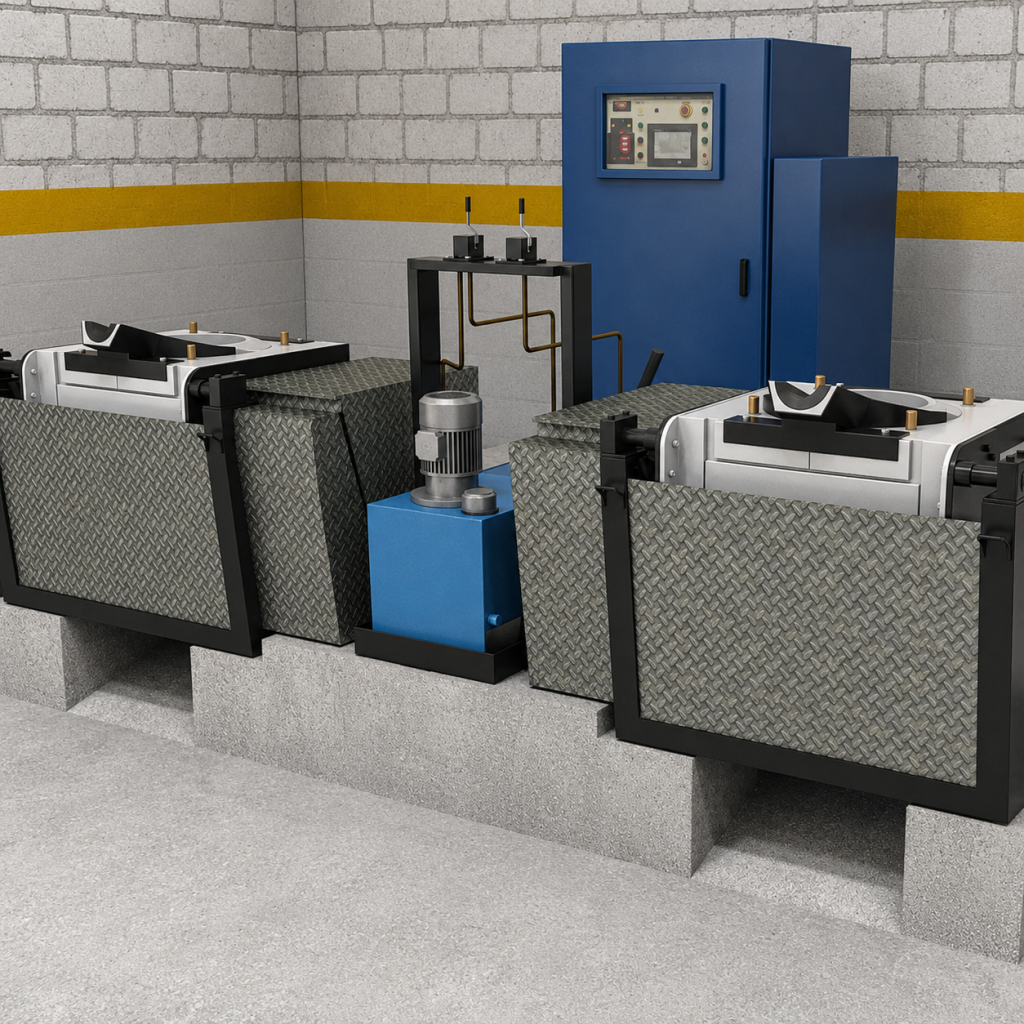
cooling connections, and overhead extraction for dedicated aluminum and copper-alloy melting campaigns.
A casting and recycling operation in Monterrey required a more controlled aluminum melting furnace line for clean ingots, aluminum scrap, runners, risers, and foundry returns, while retaining capacity for smaller brass, bronze, and copper-alloy batches. Electroheat supplied, installed, and commissioned a twin-furnace coreless induction melting system comprising two 500 kg-class vessels, a shared medium-frequency IGBT power platform, PLC/HMI controls, hydraulic tilting, demineralized-water cooling, and heat-record logging. The primary vessel was assigned to aluminum production, while the second handled segregated copper-alloy work. The arrangement reduced unnecessary changeovers, improved molten-metal handling, and gave operators a clearer record of each heat.
The client’s identity and commercial production data remain confidential. This case study focuses on the installed configuration, commissioning process, and qualitative improvements verified during handover and early production.
Project Scope and Installed Configuration
| Project Item | Installed Details |
|---|---|
| Location | Monterrey, Nuevo León, México |
| Installed system | Twin 500 kg-class coreless induction melting furnace installation |
| Capacity basis | Nominal 500 kg class per vessel; actual charge weight depended on alloy density and usable crucible volume |
| Primary aluminum route | Aluminum ingot, clean scrap, foundry returns, runners, risers, and alloy corrections |
| Secondary alloy route | Segregated brass, bronze, and copper-alloy batches with dedicated crucible procedures |
| Power and controls | Shared medium-frequency IGBT platform with furnace selection and PLC/HMI monitoring |
| Pouring arrangement | Hydraulic tilting for controlled pouring to ladles, molds, holding equipment, or downstream casting operations |
| Cooling system | Demineralized (DM) water circulation with cooling-tower support |
Production Challenge: Segregating Aluminum and Copper-Alloy Melting
The plant melted clean aluminum ingots, internal returns, runners, risers, trimmed castings, and selected recycled feed. It also produced smaller batches of brass, bronze, and copper alloys. Using one melting route for all materials required repeated furnace clean-downs, crucible changes, and tool segregation, which interrupted production and increased the risk of residue carryover between alloy families.
Aluminum also requires strict control of charge condition, superheat, holding time, skimming, and transfer. Wet or contaminated scrap and unnecessary holding can increase oxidation and dross, reducing recoverable metal. The customer therefore needed an industrial aluminum melting furnace that supported disciplined charging, temperature control, degassing or flux practice, and timely pouring, while maintaining a separate route for copper-based alloys.
Technical Assessment and Furnace Selection
Basis for Selecting the Twin 500 kg-Class Configuration
Electroheat reviewed the feed composition, batch weights, alloy families, crucible requirements, heats per shift, transformer capacity, cooling-water quality, floor space, extraction, ladle and mold positions, and maintenance access. The assessment showed that the plant did not need an oversized non-ferrous metal melting furnace. It needed two coordinated batch-melting routes with shared utilities and clear material segregation.
A coreless aluminum induction melting furnace was selected for the primary route because it offered responsive batch heating, practical alloy changes, and direct transfer into the casting workflow. The matched vessel supported brass, bronze, and copper-alloy campaigns under separate crucible and tooling procedures. A furnace-selector circuit connected the scheduled vessel to the shared IGBT power platform, so the installation prioritized flexible production rather than simultaneous full-load operation.
“For non-ferrous melting, usable metal yield is protected through disciplined charge preparation, compatible crucibles, controlled superheat, and timely pouring. Installed power matters, but process control determines the quality of each heat.”
Mr. Charlie, Chief Engineer, Electroheat Induction
Installed Aluminum and Copper-Alloy Melting System
Furnace Bodies and Crucible Management
Electroheat installed two medium-sized coreless induction furnace bodies with induction coils, application-specific crucibles, a capacitor bank, bus and cable connections, and hydraulic tilting equipment. The primary aluminum melting furnace processed clean aluminum scrap, foundry returns, and casting alloys using a defined crucible and operating procedure. The second vessel followed separate procedures for crucible, tool, cleaning, and residue handling for brass, bronze, and copper-alloy batches.
Crucible selection was matched to alloy chemistry, batch weight, operating temperature, flux practice, and pouring method. The nominal 500 kg classification described each furnace class; actual charge weight varied with alloy density and usable crucible volume. This distinction was particularly important when moving between aluminum and denser copper alloys.
IGBT Power Supply, PLC/HMI Monitoring, Cooling, and Hydraulic Tilting
The shared IGBT power platform delivered controlled medium-frequency power to the selected furnace. The PLC/HMI displayed furnace selection, power, heat time, current, voltage, kWh consumption, cooling status, alarms, trips, and interlocks. Stored heat and event records gave production supervisors a traceable operating history and helped maintenance personnel isolate electrical, cooling, hydraulic, or protection-related events.
The demineralized (DM) water circuit protected the induction coils, the capacitor bank, the power electronics, and the water-cooled paths. Hydraulic tilting enabled controlled furnace movement and molten-metal transfer to ladles, molds, holding equipment, or downstream casting operations. Overhead extraction helped control fumes during charging, skimming, and pouring.
| Installed Component | Function in the Monterrey Installation |
| Twin 500 kg-class furnace bodies and dedicated crucibles | Established separate aluminum and copper-alloy melting routes with alloy-specific crucible practice |
| IGBT power platform with PLC/HMI controls and data logging | Delivered responsive power, displayed protection and operating status, and recorded heat and event data |
| Hydraulic tilting, DM-water cooling, and extraction | Enabled controlled pouring, protected water-cooled components, and captured fumes during charging, skimming, and pouring |
Installation and Commissioning
Equipment Placement and Utility Integration
The installation team positioned the furnace bodies to preserve separate material-handling zones while maintaining access to shared power, control, cooling, hydraulic, and extraction equipment. Power connections, cooling lines, hydraulic hoses, furnace-selection circuits, and auxiliary services were routed to keep charging, maintenance, and pouring areas clear.
Pre-Commissioning Protection Checks
Before the first heat, Electroheat verified grounding, emergency stops, input protection, furnace selection, PLC/HMI communication, hydraulic movement, cooling water flow, temperature, conductivity, and component protection interlocks. The crucibles were seated, dried, and preheated in accordance with the approved procedure, and separate tools and residue containers were confirmed for the aluminum and copper-alloy routes.
Trial Heats and Operator Handover
Supervised trial heats covered charging, power ramp-up, temperature correction, skimming, degassing or flux practice, hydraulic tilting, pouring, heat recording, and shutdown. Operators were trained to confirm the furnace is active, verify interlocks before heat-on, monitor power and cooling conditions, respond to alarms, and maintain alloy segregation. Maintenance staff were shown how to review alarm history, trip navigation, and stored heat records during fault diagnosis.
Operational Results After Commissioning
Following commissioning, the plant had clearly defined melting routes for aluminum and selected copper alloys. Dedicated furnace, crucible, tool, and residue-handling procedures reduced unnecessary full clean-downs between unrelated alloy families and made changeovers easier to manage.
The aluminum production team gained better visibility of heat progression and transfer timing, helping operators limit unnecessary holding and manage oxidation and dross more consistently. Hydraulic tilting improved pouring control, while PLC/HMI records gave production and maintenance teams a shared view of heat time, energy use, cooling status, alarms, trips, and interlocks.
Commercial metal yield, melt time, energy per batch, and production figures remain confidential. The published results therefore focus on process segregation, furnace control, maintenance visibility, and operating improvements verified during commissioning and early production.
Pre-Installation Conditions and Post-Commissioning Improvements
| Pre-Installation Condition | Post-Commissioning Improvement |
| Aluminum and copper-alloy batches relied on one melting route | Dedicated furnace routes separated the two material families |
| The shared route required repeated clean-downs, crucible changes, and tool segregation | Campaign-specific furnace, crucible, and tool procedures simplified changeovers |
| Operators had limited digital visibility of heat progression and holding conditions | PLC/HMI monitoring provided heat time, power, cooling status, alarms, trips, and interlocks |
| Pouring depended on greater manual control near molten metal | Hydraulic tilting enabled controlled furnace movement and pouring into ladles and molds |
| Fault review relied on a limited event history | Stored alarm, trip, and heat records improved fault diagnosis |
Technical Basis for the Installed Configuration
The installed configuration matched the customer’s alloy mix and production workflow. The twin-furnace layout separated aluminum from copper-alloy batches; campaign-specific crucibles protected metallurgical integrity; the IGBT power supply provided responsive heat control; PLC/HMI monitoring improved process visibility; DM-water cooling protected thermally loaded components; and hydraulic tilting improved pouring control.
For aluminum foundries, die-casting operations, and metal recyclers, charge quality, crucible selection, power, cooling, skimming, and pouring must be engineered as one system. This principle applies equally to an industrial aluminum melting furnace, an aluminum recycling furnace, or an aluminum scrap melting furnace handling clean, segregated feed.
Related Electroheat Equipment and Technical Support
Electroheat can integrate the furnace, IGBT power supply, crucibles, cooling system, transformer, controls, spare parts, and technical support to align with the customer’s alloy mix and production workflow.
- Aluminum Melting Furnaces
- Induction Melting Furnaces
- Silicon Carbide Crucibles
- Cooling Towers
- Power Transformers
- Foundry and Mining Furnace Consulting
Request an Aluminum Furnace Configuration Review
Share your aluminum feed, alloy families, batch size, available power, cooling-water conditions, floor layout, and pouring method. Electroheat can recommend the vessel capacity, single- or twin-furnace arrangement, IGBT power, PLC/HMI controls, cooling, hydraulic tilting, installation, commissioning, and the scope of spare parts.